From Awareness to Action
Each May, communities across the country come together to uplift children’s mental health—a tradition rooted in family advocacy. In 2026, we build on that foundation by shifting the focus from Awareness to Action, following the leadership of the National Federation of Families.
Awareness is the starting point. Action is what drives change.
Support Your Children’s Mental Health Action Month Campaign
Whether you’re planning for Children’s Mental Health Action Day (May 7), organizing activities during Action Week (first full week of May), or leading efforts throughout the month, the 2026 Children’s Mental Health Action Month Social Media Toolkit is designed to help you engage your community and amplify your impact.


What This Toolkit Helps You Do
- Promote local action with customizable, ready-to-use social media content
- Increase engagement using platform-specific strategies and timing tips
- Create a unified national presence with shared graphics and messaging
- Amplify impact by connecting your work to a broader movement
2026 Children's Mental Health Action Month Resources
We are celebrating Children's Mental Health Action Month all May long! Check back often as we add new information and resources.
We're kicking off Children's Mental Health Action Month 2026 by celebrating youth leadership! Check out these essential resources from our partners at Youth MOVE National.
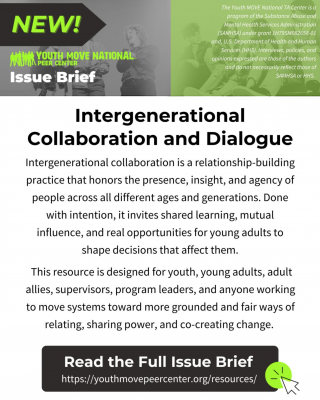
Intergenerational Collaboration & Dialogue
This resource is designed for youth, young adults, adult allies, supervisors, program leaders, and anyone working to move systems toward more grounded and fair ways of relating, sharing power, and co-creating change.
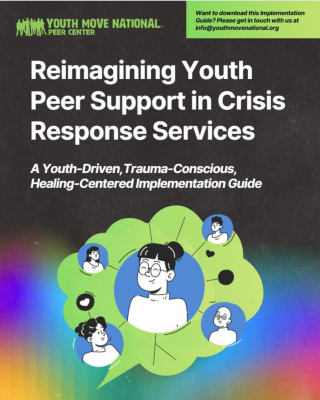
Reimagining Youth Peer Support in Crisis Response Services Implementation Guide
This resource is a youth-driven, trauma-conscious, healing-centered resource designed for systems leaders, administrators, and adult staff shaping crisis response services, who are or may be supporting youth peer support roles in these settings and youth and young adults who are in, or considering, youth peer support roles within crisis response services.
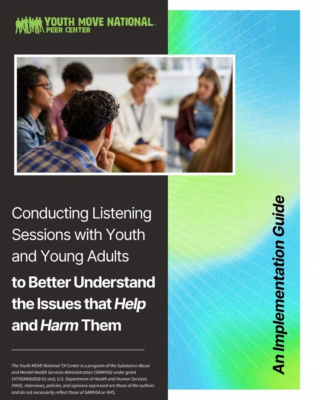
This implementation guide offers an in-depth overview of YMN’s What Helps, What Harms (WHWH) Framework, an intentional, trauma-informed, youth-driven approach to conducting listening sessions that can inform and lead to real change within systems, communities, agencies, and other settings that impact young people.
For Week 2 of Children's Mental Health Action Month 2026, we recorded a bonus episode of Unwrapping Wraparound, From Awareness to Action with Michelle Zabel.
In this special Children's Mental Health Action Month bonus episode of Unwrapping Wraparound, Innovations Institute Executive Director Michelle Zabel joins Covi and Conan for a powerful conversation about systems change, workforce support, care coordination, and the role we all play in supporting children, youth, and families. From Policy and data to resilience and community action, Michelle shares reflections from decades of leadership in children's behavioral health—and a call to move beyond awareness and into action.
At Innovations Institute, we know that early relationships and everyday interactions help shape lifelong wellbeing. That's why we created a series of early childhood videos from our PIEC team focused on the Pyramid Model, which offers practical tools to support young children and the adults who care for them. Download all 8 Pyramid Model handouts!
When emotions feel overwhelming, helping a child reconnect to the present moment can make a big difference. This simple grounding exercise uses the five senses to help children calm their minds and bodies.
Try asking them to name:
- 5️⃣ things they see
- 4️⃣ things they can touch
- 3️⃣ things they hear
- 2️⃣ things they can smell
- 1️⃣ thing they can taste
This technique can help reduce stress and support co-regulation in the moment.
Supporting a young child’s emotional well-being doesn’t always require big changes. Often, the most meaningful moments happen during everyday routines.
Try these simple ways to turn daily activities into opportunities for connection, learning, and comfort:
- At the grocery store: Talk about colors, shapes, and practice patience together.
- During bath time: Sing songs, describe sensations, and create a calming routine.
- While folding laundry: Explore textures and enjoy cozy connection time.
- In the car: Play “I-Spy” or talk about your day together.
When a young child is overwhelmed, the goal isn’t to “fix” their behavior—it’s to help them feel safe, calm, and supported. Our “In the Moment” practice guide for caregivers focuses on 3 simple steps:
- Regulate Yourself: Stay calm and grounded so you can support the child.
- Co-Regulate Together: Model calm, offer comfort, and practice calming strategies together.
- Problem-Solve: Once the child is calm, help them name the problem and explore solutions.
As Children's Mental Health Action Month 2026 comes to a close, we invite you to reflect on an important truth: communities hold knowledge, wisdom, and solutions that deserve to be recognized, elevated, and invested in.
Too often, communities—particularly those that have been historically marginalized—develop practices that foster healing, connection, resilience, and wellbeing long before formal systems acknowledge them. Community-Defined Evidence Practices (CDEPs) challenge us to expand how we think about "evidence" by centering lived experience, culture, relationships, and community voice. At Innovations Institute, we believe children, youth, families, and communities should not simply be recipients of services—they should help define what works.
Watch our short animation to learn more about CDEPs and why community-centered solutions matter for children's mental health and wellbeing.
Linked In Graphics



Facebook & Instagram Graphics